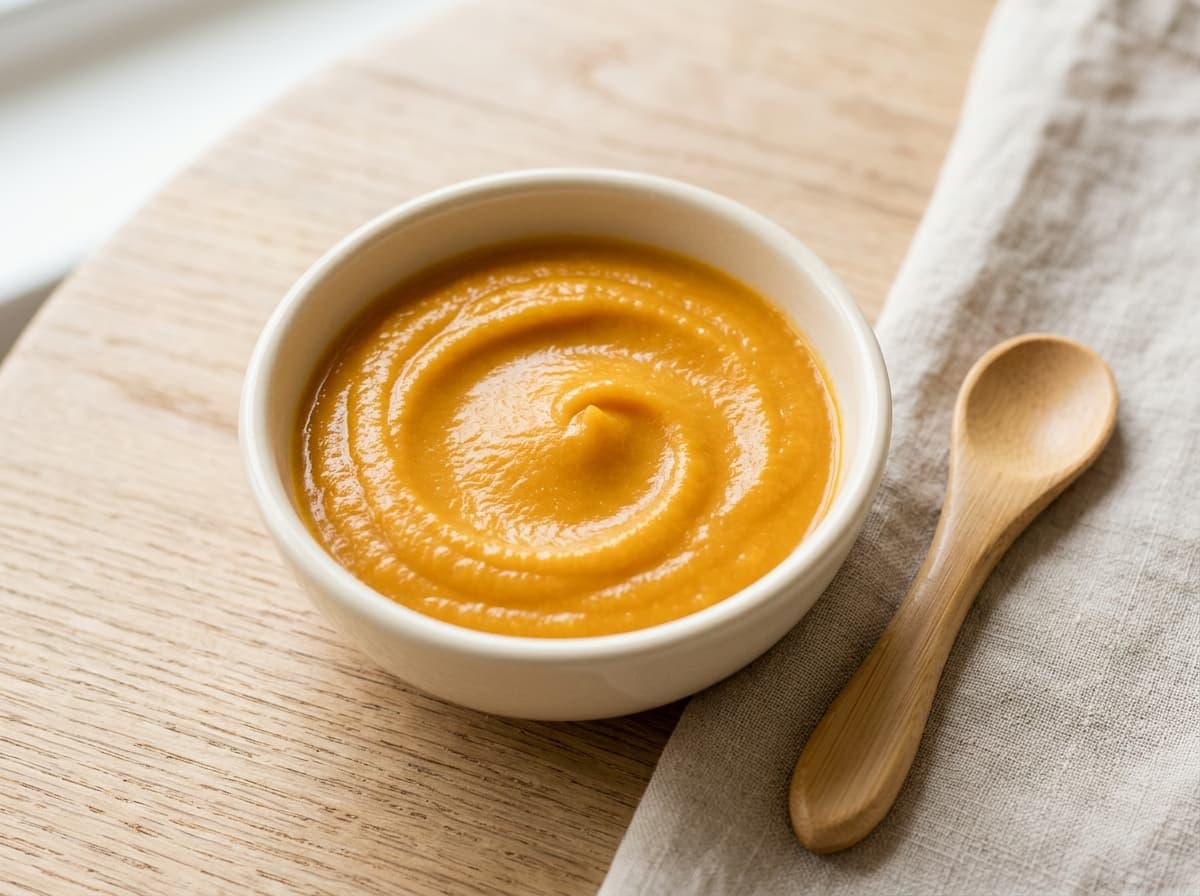
Mild Polenta and Tomato Bites for Babies
Mild Polenta and Tomato Bites for Little Explorers
These gentle polenta and tomato bites are a wonderful way to introduce new flavors to your child. The fine cornmeal provides valuable energy, while the mild tomato adds a soft, fruity note. You can adapt this recipe with great flexibility: serve it as a creamy puree or cut it into soft, graspable pieces for slightly older babies. In this way, these bites accompany your child through various stages of starting solid foods.
The transition to solid food is an exciting step. Many parents look for simple, easily digestible recipes that fit effortlessly into family life. Polenta is a wonderful choice for this, as it is quick to prepare and has a very mild flavor that many children enjoy right away.
Ingredients
- 50 g fine cornmeal (polenta, organic if possible)
- 200 ml water or unsalted vegetable broth (suitable for babies)
- 1 tablespoon mild tomato paste (no added salt)
- 1 teaspoon high-quality canola oil (or baby weaning oil)
Makes about 2 to 3 small portions.
Preparation
- Bring the water or unsalted broth to a boil in a small saucepan.
- Slowly whisk in the cornmeal to prevent any lumps from forming.
- Reduce the heat and let the polenta simmer gently on low for about 10 minutes. Stir regularly until a smooth, creamy texture is achieved.
- Remove the pot from the stove and stir in the tomato paste and canola oil evenly.
- For early weaning, serve the mixture as a creamy puree in a small bowl. For older babies, spread the polenta smoothly on a flat plate, let it cool completely, and then cut it into soft cubes.
- Always check the temperature before feeding to ensure your child does not burn their mouth.
Variations & Tips for Everyday Family Life
- Vegetable Variation: Simply swap the tomato paste for finely pureed carrots, mild pumpkin, or a little sweet potato. This allows your child to constantly discover new flavors.
- Storage and Preparation: The prepared puree keeps well in a sealed container in the fridge for up to two days. You can also easily freeze the polenta in ice cube trays and thaw individual portions as needed. This makes weekday planning much easier.
- Adjusting Texture: For babies starting around five months, simply add a little more water, breastmilk, or formula to create a very smooth, liquid puree. As your child grows older, you can reduce the amount of liquid to achieve a firmer consistency.
- For the Whole Family: Cut the firm polenta into thick slices and fry them in a pan with a little salt, pepper, and fresh herbs for the parents to enjoy. This pairs perfectly with a fresh salad or a hearty ratatouille.
Allergy & Safety Information
Always introduce new ingredients one at a time and in small amounts to easily observe any potential reactions. The classic three-day rule helps you keep track of new foods. Watch your child closely during this time to ensure they tolerate the new ingredient well.
This recipe is naturally gluten-free and the basic version does not contain any of the 14 major allergens. However, always check store-bought broth for hidden ingredients like celery.
Completely avoid salt, sugar, and honey during the first year of life. Honey can be dangerous for babies and cause severe infections. Nuts and seeds must only be mixed in as a fine butter due to the choking hazard. Whole or roughly chopped nuts are unsafe for young children. If you have any concerns about introducing solid foods or food tolerances, please consult your pediatrician.
Good to Know: Nutrients for Your Baby
Cornmeal is an excellent, easily digestible source of carbohydrates that gives your child quick energy for the day. Because it is naturally gluten-free, it is considered particularly gentle on little tummies.
The tomato paste contains valuable vitamin C, which supports the body's absorption of iron from other plant-based foods. This is especially important if you are offering a vegetarian weaning diet. The added canola oil provides essential omega-3 fatty acids, which are highly beneficial for child development and the building of brain cells at this stage. Canola oil is frequently recommended for baby food because it has a very favorable fatty acid profile.
Creating a Relaxed Mealtime
Take plenty of time for those first few spoonfuls and create a calm atmosphere at the dining table. Many children need a few attempts before they accept a new texture or flavor. This is a common occurrence and part of the exciting journey of discovery. Offer the food without pressure and let your child set the pace. Eating meals together also strengthens your bond and shows your child that eating is a joyful family event.