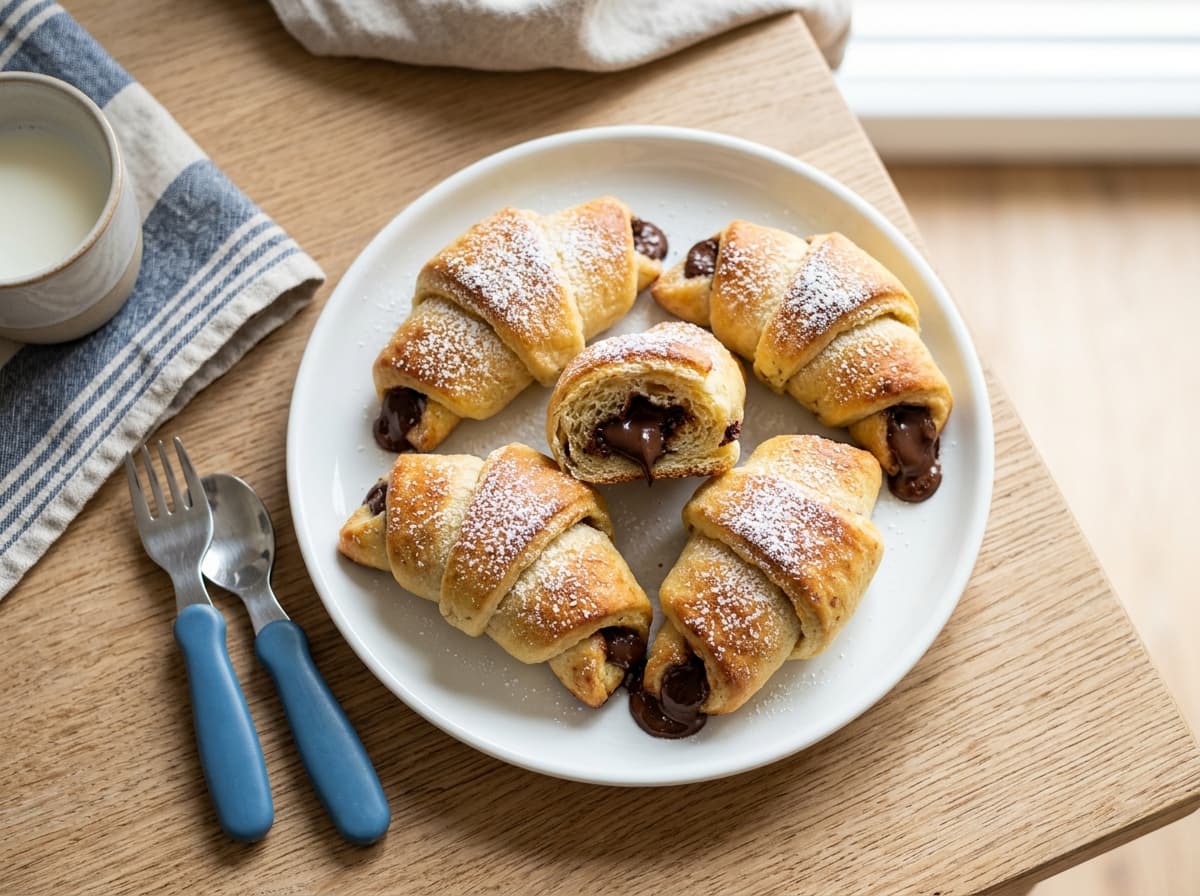
Quick Chocolate Croissants from Quark-Oil Dough
Baking together brings great joy to many children and playfully supports their fine motor skills [1]. Measuring the ingredients, kneading the dough, and shaping the little pastries provide wonderful sensory experiences. This smooth quark-oil dough does not need to rise and is incredibly easy to roll out. This makes it an ideal choice when the patience of little bakers is still limited. The small chocolate croissants make a wonderful snack for cozy afternoons and bring the whole family together at the dining table. Children love helping in the kitchen, weighing ingredients, and working the dough with their own hands. Such shared activities strengthen your bond and create beautiful memories.
Ingredients
You will need the following ingredients for the dough and the filling. Feel free to choose organic dairy products if possible.
- 150 g low-fat quark
- 4 tbsp neutral vegetable oil (such as canola oil or sunflower oil)
- 4 tbsp milk (whole milk or a plant-based alternative)
- 40 g fine sugar
- 1 packet vanilla sugar (or 1 tsp vanilla extract)
- 250 g all-purpose flour or light spelt flour
- 2 tsp baking powder
- 3 tbsp hazelnut-chocolate spread (or pure almond butter mixed with a little cocoa powder)
- A splash of extra milk for brushing the croissants
This recipe makes about 8 small croissants, which equals roughly 2 to 3 portions.
Preparation
- Preheat the oven to 180 degrees Celsius (350 degrees Fahrenheit). Line a baking sheet with a piece of parchment paper and set it aside.
- Combine the quark, oil, milk, sugar, and vanilla in a large bowl. Whisk everything together thoroughly until you have a smooth and creamy mixture.
- Mix the flour and baking powder in a separate bowl. Add this dry mixture to the wet quark ingredients and knead everything with your hands into a soft, pliable dough.
- Roll the finished dough out on a lightly floured surface using a rolling pin. Aim for a large circle, roughly the size of a standard pizza.
- Cut the dough circle into eight equal slices using a dull knife or a pizza cutter. This will give you eight long triangles.
- Place a small dollop of the hazelnut-chocolate spread on the wide end of each dough triangle. Be careful not to use too much filling, so it does not leak out during baking.
- Gently roll the triangles up from the wide end toward the tip. Curve the ends slightly inward to create the classic crescent shape.
- Place the croissants on the prepared baking sheet, leaving a little space between them. Brush the surface with a little milk and bake in the oven for about 15 minutes until golden brown.
- Let the chocolate croissants cool completely on a wire rack. Always check the temperature of the filling before eating, as the inside often remains very hot.
Variations and Tips
- Fruity variation: Instead of chocolate spread, you can use unsweetened applesauce, plum butter, or mashed bananas for the filling. This adds a lovely natural sweetness to the pastry.
- Storage: Stored in an airtight container, the croissants stay fresh at room temperature for about two days. They also freeze beautifully. After thawing, you can quickly reheat the croissants in the oven to make them wonderfully soft again.
- Family tip: For adults, you can sprinkle the croissants with chopped hazelnuts or add a pinch of cinnamon to the filling. This instantly turns the kid-friendly recipe into a treat for the grown-ups.
- Adjusting texture: For younger children, you can shape the croissants a bit smaller and reduce the baking time by two to three minutes. This keeps the dough even softer and easier to chew.
Allergy and Safety Information
This recipe contains gluten, dairy, and tree nuts (depending on the chosen filling), which belong to the major food allergens. Always introduce new ingredients one at a time and in small amounts to carefully observe any potential allergic reactions in your child.
When using store-bought hazelnut-chocolate spread, make absolutely sure there are no large nut pieces included. Whole or coarsely chopped nuts pose a significant choking hazard for young children and may only be used finely ground [2]. If you have any concerns about introducing solid foods or your child's general diet, please consult your pediatrician.
Nutritional Information
The low-fat quark in the dough provides valuable protein and calcium, which are important for supporting bone development. The canola oil used offers essential unsaturated fatty acids, which are highly beneficial for healthy brain development. Enjoyed as an occasional sweet treat, these croissants provide quick energy for active afternoons on the playground.